A photo of a young teen with a phone in front of a government building.
Life Online
7 min read

The debate on cell phone bans in schools

By Jackie Baucom

Updated – Originally published December 11, 2024

Schools across the United States are wrestling with a question that has sparked debate among educators, administrators, and parents: should cell phones be banned in schools?

With the student use of smartphones on campus increasing, parents and school officials are weighing the impacts of excessive smartphone access during school hours on students’ learning, focus, and social well-being. 

Should cell phones be banned in schools?

The question of whether smartphones on campus should be banned in schools has generated strong opinions on both sides, with advocates highlighting benefits like reduced distractions and increased focus, and opponents pointing to the importance of safety, communication, and access to educational tools.

Here’s a breakdown of the pros and cons of banning phones in schools and a look at how some states have addressed this issue.

Pros to banning phones in schools

Proponents argue that banning cell phones helps create an environment where students are fully engaged, free from the distractions of social media, and more focused on learning. 

The U.S. Surgeon General’s recent warning about the potential mental health impacts of social media on kids has become a key influence in the movement to limit or ban phones in schools. 

little kids looking down at cell phones with backpacks

Some research suggests that smartphone access during school hours can lead to attention issues and hinder academic performance.

Teachers have also reported that smartphones disrupt classroom dynamics and increase anxieties associated with social media pressures. A Pew Research Center survey found that 72% of high school and 33% of middle school teachers report cell phone distractions as a major problem.

Cons to banning phones in schools

On the other side, some argue that phones can be a critical communication tool, providing safety and coordination for students and their families. Parents can reach their children during emergencies, and students can access educational resources. 

One downside to banning phones is the added responsibility it places on teachers, who must monitor and enforce restrictions on top of teaching. This extra task can create stress, detract from instruction time, and sometimes strain teacher-student relationships, as teachers balance discipline with maintaining a positive classroom environment.

Rather than an outright ban, some propose that by working together, educators, administrators, and parents can create policies that allow limited, structured phone use. Jeffrey Collins, a reporter in West Columbia, South Carolina, has highlighted this nuanced view, emphasizing collaboration to balance safety with minimizing distractions.

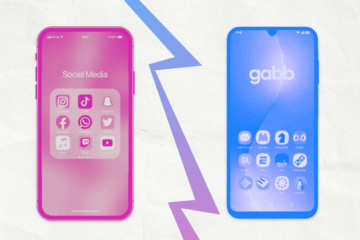
Smartphones vs safephones

The debate over cell phone bans in schools continues, with valid arguments on both sides. As you can see below, some states have implemented outright bans or limitations, while others encourage school districts to create policies that suit their community needs.

Gabb empathizes with both sides of the debate. A child who needs support for significant challenges should be able to communicate with their parent or guardian, and there is an added level of physical safety when that connection is allowed. On the other hand, educators face a massive challenge as adult smartphones clearly cause disruptions to learning and mental health challenges in young people.

That is the core problem: students have adult technology on their desks and in their pockets.

We support solutions that both preserve parent-child communication and unburden students from screen addiction by creating policies that allow safephones in schools. Safephones differ dramatically from adult smartphones. They are designed specifically for kids and teens with minimal distractions, free from addictive social media apps and unsafe internet browsers. 

A child who needs support for significant challenges should be able to communicate with their parent or guardian, and there is an added level of physical safety when that connection is allowed.  

Gabb supports school policies that ban or limit adult smartphones, and recognize safephones as the solution that protects learning and maintains family connection.

How do teens feel about phone bans in schools?

As cell phone bans become more popular across the nation, you might assume that teens oppose the ban. But the results of a 2025 Pew Research Report might surprise you.

According to Pew, 41% of teens in the US “say they support banning middle and high school students from using cellphones during class.” Half of teens are not in favor of a ban, while 9% aren’t sure.

But, unsurprisingly, most teens don’t support an all-day cell phone ban. One in five teens support an all-day ban, while 73% oppose it. 

In New York, which implemented a full cell-phone ban last year, students are taking to the ban surprisingly well. 

According to New York Magazine, “There’s a pleasant buzz in the lunchroom, chatter in the hallways, and an alphabet of new analog hobbies popping up just about everywhere.”

Teachers have provided students with board games, card games, and more during their free time. And students are using them. 

Aidan Amin, a ninth grader, told New York Magazine, “I’d say it’s made us closer. Honestly, half the people I’m playing board games with I didn’t know at all before this.”

What states have banned cell phones in schools?

Several states have introduced policies to regulate or ban student cell phone use in schools, often driven by concerns about student focus, safety, and mental health.

Here’s a quick look at some state-specific measures:

  • California: California Governor Gavin Newsom has long proposed a statewide ban on cell phones in schools. In September 2024, Newsom signed a law requiring school districts to adopt policies that either limit or prohibit smartphone use in schools by July 2026, aiming to foster a “place of focus, learning, and growth.” This initiative aligns with steps already taken by the Los Angeles Unified School District, which recently implemented its own restrictions on cell phone use during school hours
  • Colorado: The Attorney General has offered a $50,000 grant to school districts that implement policies limiting cell phone use in classrooms. 
  • Connecticut: The State Board of Education passed guidelines encouraging local districts to create policies limiting phone access in schools.
  • Florida: Florida implemented legislation in 2023 that limits phone access during instructional time across public K-12 schools.
  • Indiana: Senate Bill 185 requires school districts to develop rules around cell phone and other wireless communication device usage in classrooms.
  • Louisiana: Senate Bill 207 prohibits students from cell phone usage on school grounds and school buses. Any device brought on school property must be turned off and put away.
  • New Jersey: At the beginning of January 2026, Governor Phil Murphy signed a ban restricting public school students “from using smartphones and other devices with internet access during the school day.”
  • New York: Last year, Governor Kathy Hochul signed a “bell-to-bell” cell phone ban in order to “help protect children from addictive technology.”
  • Ohio: School districts are required to have policies that limit phone use during school hours by July 2025.
  • South Carolina: A statewide budget provision ties funding to compliance with a cell phone ban. Schools must implement policies that restrict smartphone access to receive state funds.
  • Virginia: In Virginia, Governor Youngkin’s Executive Order 33 set out to establish cell phone-free educational spaces.

Other states that have implemented full or partial cell phone bans include:

  • North Carolina
  • Georgia
  • Maine
  • Rhode Island
  • Vermont
  • Alabama
  • Florida
  • Kentucky
  • Tennessee
  • Mississippi 
  • Arkansas 

And more. 

The role of parents

Parents can play a crucial role in school phone policies by actively participating in meetings, forums, and surveys where these decisions are discussed. Many schools hold open forums or parent-teacher meetings, offering a platform to voice concerns and suggestions about cell phone use policies. 

Parents can also join local or state education boards, or connect with organizations focused on digital wellness to gather resources and advocate for policies that balance safety, focus, and appropriate technology use. 

As the conversation evolves, collaboration among educators, administrators, and parents remains essential in finding the balance that best supports student learning and safety.

How do you feel about phone bans in school? Do you think phones should be banned all day or just during class hours? Let us know in the comments!

cell phone bans in schools pros and cons

We’d love to hear your thoughts! Do you think cell phones should be allowed in schools, or is a ban the right approach? Share your perspective in the comments below.

Let Us Come to You

Subscribe to the Gabb newsletter to get the top tech safety ideas, stories, and tips.

Comments

Leave a comment

Your email address will not be published. Required fields are marked *

Success!

Your comment has been submitted for review! We will notify you when it has been approved and posted!

Thank you!