WHY GABBSo kids can stay kids
Somewhere between first grade and middle school, childhood started competing with a screen for every spare minute. Gabb helps parents stay connected while preserving the childhood they want for their kids.

They only get one childhood.
11.6years old
is the average age a kid gets their first smartphone.
Time teens spend on screens for entertainment—not school
8.5hours a day
The average kid gets their first smartphone at 11.6 years old. By the time they're a teenager, they're spending close to eight and a half hours a day on screens—not for school, just for entertainment.
Most of that technology wasn't built for kids. It was built for engagement—more time on screen, more content, and more clicks. The same engagement tactics that can hold an adult's attention for hours now show up in many of the apps kids use.
In 2023, the U.S. Surgeon General issued an advisory on the risks social media poses to children's mental health. Childhood is finite. The window for unstructured play, boredom-fueled creativity, and friendships that happen in person doesn't stay open forever. We believe childhood is worth protecting.
Built for kids from the beginning.
For a long time, the easiest way for parents to stay connected with their kids was to hand them a smartphone—and everything that comes with it. The connection was there, but so was the open internet, social media, and apps designed to keep kids glued to a screen.
We believe there is a better way.
Gabb devices are built to meet kids where they are—focused on what they need so they can build healthy habits as they grow.
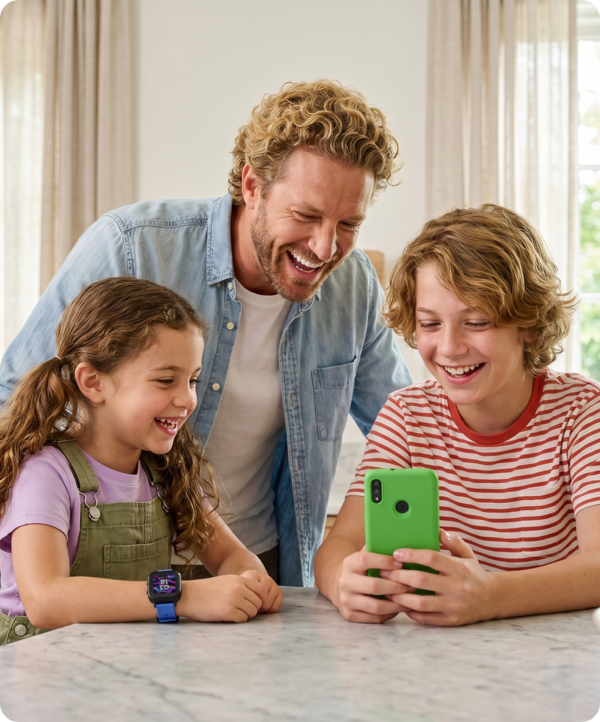
Safer by design—not just by settings.
THE USUAL PATH
Some kid phones start locked down, then open the door to browsers, app stores, and social media as kids grow.
GABB TAKES A DIFFERENT PATH
Our devices don't slowly turn into adult smartphones. They stay focused on safer communication, age-appropriate tools, and the belief that more independence doesn't have to mean more risks.
Parents still guide the experience. But they don't have to keep rebuilding the guardrails every time a new app, trend, or update comes along.
Fewer digital doors to manage—and more room for kids to grow before the full online world is at their fingertips.

Connection that counts.
Gabb gives kids the tools to stay in touch with the people who matter most—family, close friends, and the contacts parents approve.3
GPS tracking and Safe Zones1
Help you know where they are
Calling and texting
For everyday check-ins
Gabb Messenger2
Smart filtration to help conversations stay safer
Safer Video Calling4
With approved contacts3
Simple, reliable, and built around real relationships.
Independence happens one step at a time.
There's no right age for technology. Every kid is different, and honestly, every year is different—a kid who wasn't ready for something at eight might be ready at ten.
Gabb's Tech in Steps approach is built around that reality. Start with what your kid needs right now, help them build healthy habits, and introduce more when they're ready. A first device that fits a five-year-old looks different from one that fits a twelve-year-old—and both look different from a full smartphone.

A first device
Calling and texting with the people you approve.

A little more
Music, messaging, and habits that grow with them.

Greater independence
Still focused. Still without the open internet.
You know your kid better than any algorithm.
Find your kid's first deviceHealthy childhood. Healthy future.
~40%
of children ages 8–12 are on social platforms, according to the U.S. Surgeon General's advisory—even though most platforms set a minimum age of 13.
Gabb is designed to give kids a healthier relationship with technology from the start—so that when they have more freedom, they're ready for it.
More life beyond the screen.
There's a version of childhood that has nothing to do with a phone. A long afternoon with nowhere to be. A bike ride. Boredom that turns into adventure. That childhood still exists. It needs room to be seen.
The right start can make all the difference.
Give your kid technology made for where they are now—to help prepare them for where they're going next.
1 GPS location updates approximately every 15 minutes. Accuracy depends on GPS signal strength, cellular connectivity, battery level, and device conditions. Not a real-time or continuous monitoring service. Safe Zone alerts are based on the most recent location update.
2 Content filtering significantly reduces exposure to inappropriate content. No filter is 100% effective. Gabb Messenger uses AI-powered filtering to flag potentially inappropriate messages and images.
3 Contact management is child-managed by default on Gabb Phones. Parent-managed mode must be manually enabled in the MyGabb app. On the Gabb Watch, contacts are always parent-managed.
4 Video calls are monitored via periodic screenshots, not continuous recording.